


Affiliate disclosure: This article may contain affiliate links. If you purchase through these links, we may earn a commission at no extra cost to you. We only recommend resources that are relevant to puppy training and dog care.

Puppy Training Equipment Checklist: What You Really Need Before Bringing Your Puppy Home
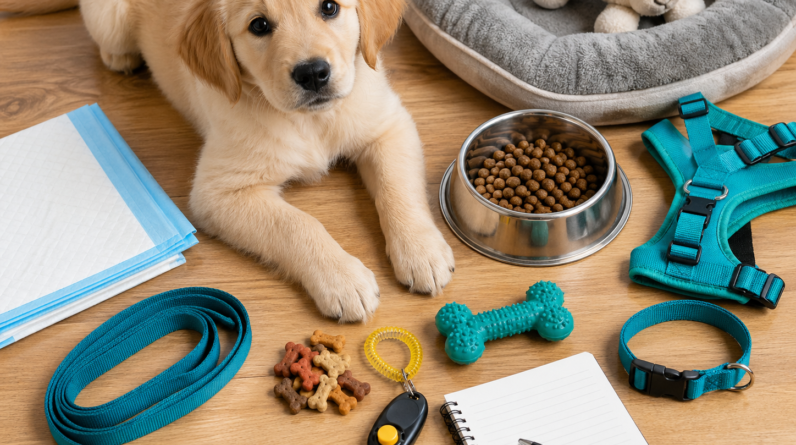
Bringing a new puppy home is exciting, but it is much easier when you have the right basic equipment ready before they arrive.
The good news is that you do not need to buy everything at once. Puppy training does not require a house full of gadgets. What you really need are a few simple, practical items that help with toilet training, sleeping, walking, chewing, feeding and early obedience.
This puppy training equipment checklist will help you prepare without wasting money on things you may never use.
-
A Comfortable Collar or Harness
Your puppy will need a well-fitting collar or harness for everyday safety and early lead training.
A collar is useful for an ID tag, while a harness can be better for gentle walking practice because it avoids pressure on the puppy’s neck.
Make sure the fit is snug but not tight. You should usually be able to fit two fingers between the collar or harness and your puppy’s body.
Puppies grow quickly, so check the fit often.
-
A Lightweight Puppy Lead
A lightweight lead is ideal for young puppies. Heavy leads can feel uncomfortable and may make your puppy nervous.
In the early stages, use the lead indoors or in the garden first. Let your puppy get used to the feel of it before expecting perfect walking outside.
A standard lead is usually better than a retractable lead for training, because it gives you more control and helps your puppy learn to walk close to you.
-
Training Treats
Small, soft treats are one of the most useful puppy training tools.
Treats help your puppy understand which behaviours you want to see again. They are especially helpful for teaching commands like sit, come, leave it and wait.
Choose treats that are small enough for frequent use. Puppy training works best when rewards are quick, clear and not too filling.
You can also use small pieces of your puppy’s normal food during simple training sessions.
-
Food and Water Bowls
Your puppy needs sturdy food and water bowls that are easy to clean.
Non-slip bowls are helpful because puppies can be clumsy and enthusiastic at mealtimes.
Keep fresh water available, and feed your puppy according to the routine recommended for their age and breed.
A regular feeding schedule also helps with toilet training because puppies often need to go outside shortly after eating.
-
A Crate or Puppy-Safe Sleeping Area
A crate can be very helpful for toilet training, sleeping and giving your puppy a safe place to rest.
However, a crate should never be used as punishment.
Make it comfortable with soft bedding and introduce it slowly. Leave the door open at first and encourage your puppy to explore it calmly.
If you do not want to use a crate, you can create a puppy-safe area with a bed, playpen or gated space.
The key is to give your puppy somewhere secure and quiet.
-
Puppy Bed and Blankets
Your puppy needs a comfortable place to sleep.
Choose bedding that is washable, because accidents may happen in the early days.
Some puppies chew soft beds, so avoid expensive bedding at first. A simple washable bed or blanket is often enough.
A blanket with familiar smells can also help your puppy settle during the first few nights.
-
Safe Chew Toys
Puppies chew. It is normal, especially during teething.
If you do not provide suitable chew toys, your puppy may chew shoes, furniture, wires or clothing instead.
Choose safe puppy chew toys that are suitable for your puppy’s size and age. Avoid anything too hard, too small, or easy to break into pieces.
Rotating toys every few days can help keep your puppy interested.
-
Puppy Pads or Toilet Training Supplies
Some owners use puppy pads, especially in flats, during bad weather, or before a puppy can safely go outside.
However, if your goal is outdoor toilet training, use pads carefully. Some puppies become confused if they are encouraged to toilet indoors and then later expected to go outside.
You may also need enzyme cleaner for accidents. This is important because ordinary cleaning products may not remove the smell fully, and lingering scent can encourage repeat accidents.
-
Grooming Basics
Even young puppies need to get used to grooming.
Basic grooming items may include:
A soft brush
Puppy-safe shampoo
A towel
Nail clippers or a nail file
Ear-cleaning supplies if advised
A toothbrush and puppy toothpaste
You do not need to do everything at once. Start with gentle handling and short grooming sessions.
-
A Treat Pouch or Small Bag
A treat pouch is not essential, but it is useful.
It keeps treats close at hand so you can reward good behaviour immediately.
This is especially helpful during recall practice, lead training and toilet training.
Timing matters in puppy training. The faster you reward the right behaviour, the easier it is for your puppy to understand.
Final Thoughts
You do not need every puppy product on the market. The best puppy training equipment is simple, safe and practical.
Start with the basics: collar or harness, lead, treats, bowls, bed, crate or safe area, chew toys, toilet supplies and grooming items.
With the right equipment ready, your puppy’s first days at home will be calmer, easier and more organised.

